


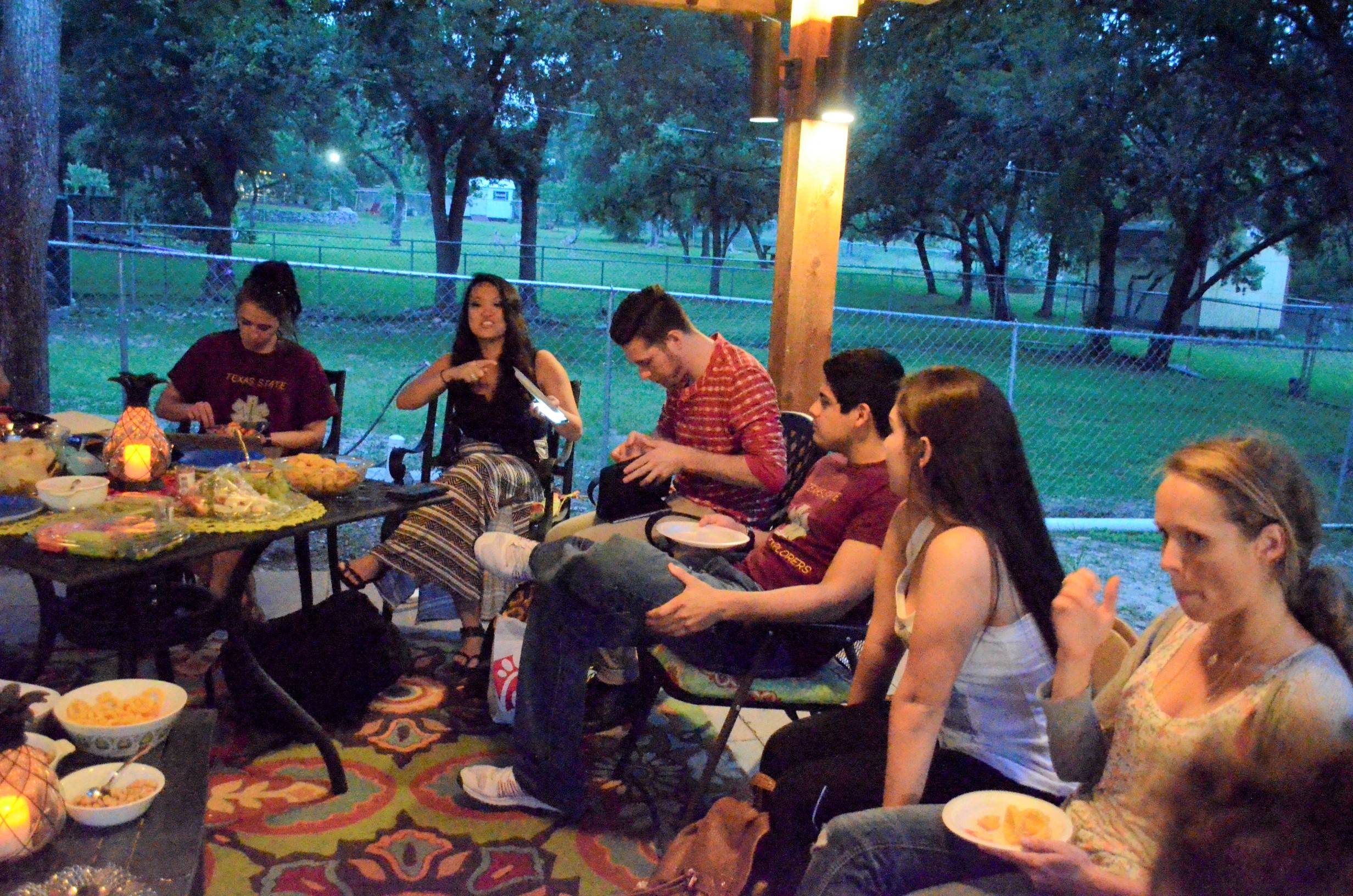
Officers and Liaisons meeting - a teamwork operation
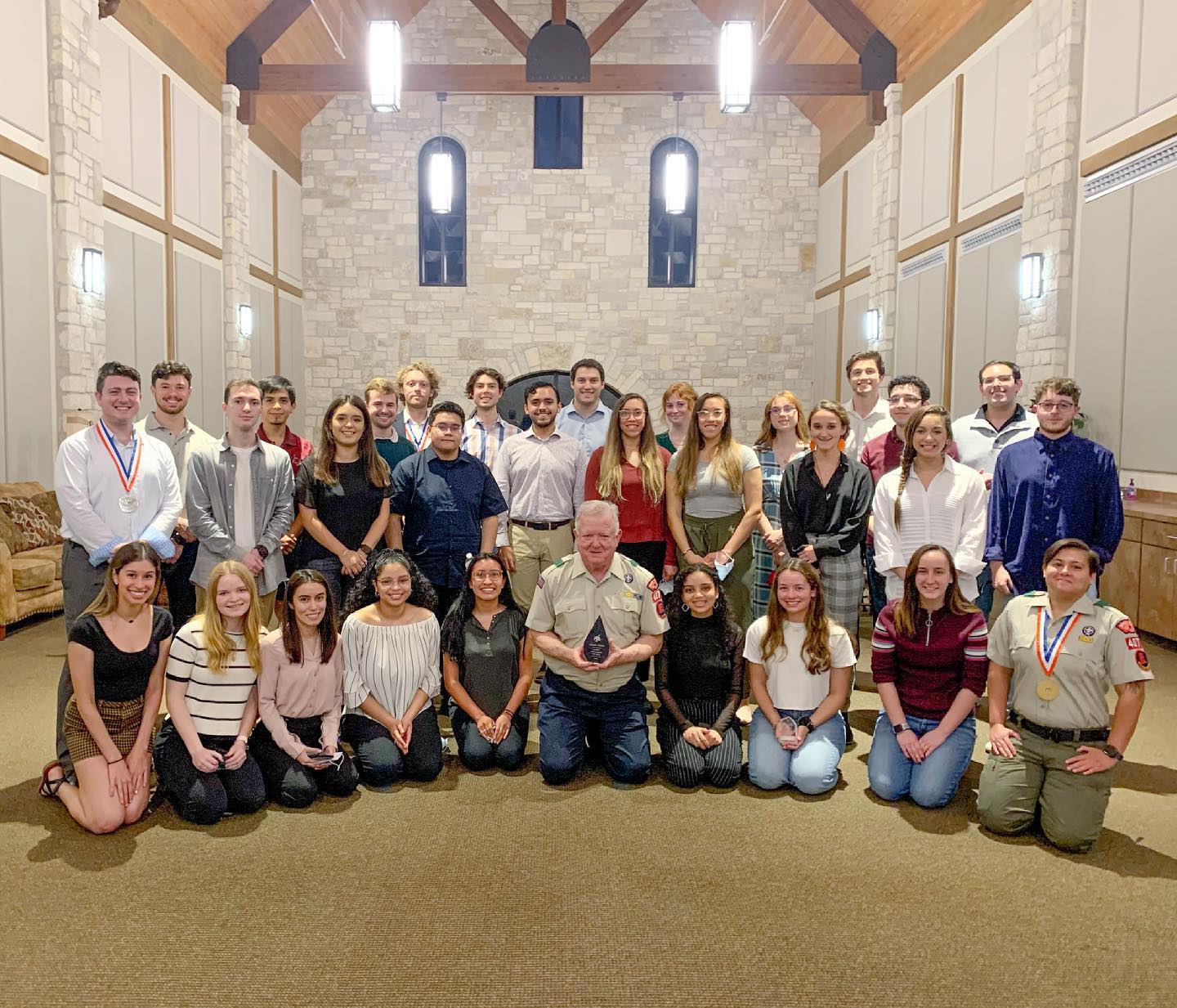
Medical Explorers who earned the Outstanding Organization of the Year in 2021. Notice the U.S. Presidential Volunteer Service Awards.
Officers and Liaisons have significant responsibilities as leaders of our Omega Leo Medical Explorer Post 4077. It should be remembered that we are not just a student organization; we are a “Volunteer Medical Organization.” Medical Explorers must be mature and ready to assume responsibility for the training and administration within our one-of-a-kind organization. We have serious responsibility within our communities. Because of our training and volunteer presence, we also have the respect of our communities, both medical and otherwise. Guard that respect carefully.
This is not a job to be taken lightly! We have serious expectations. Our Officers have executive responsibilities that ensure we meet external expectations. Our volunteer Liaisons are responsible for the smooth operation of their smaller, but essential parts of our operation. Our Liaisons are our first line of interaction with our community.
Help is always readily available from both our student and senior advisors. Student advisors have already served as an officer or liaison. They know what needs to be done and how best to achieve it. They have already proven themselves as leaders.
Our senior advisors have many years of experience in our operations, and are primarily responsible for continuity from year to year. They also carry responsibility for interfacing with many groups in our community. Seek their advice on any problem; they have probably seen it before.
Each of us are part of something bigger than all of us put together. We have responsibility to Texas State University to ensure we represent the university in the best light we can. We have responsibility to our alumni to continue a great organization they helped build. And then we have responsibility to our many affiliated organizations that have great hopes for our success and depend upon us. Each of us should feel the weight of this responsibility but relish the satisfaction that comes from helping create a New Way of preparing future health professionals. Someday, you'll look back and say, “I was there at the beginning.”
Medical Explorer Job Descriptions - A First-Step in Management
Our officers and liaisons need to help get these job descriptions written correctly. Consider these a draft. You need to put your stamp of approval on yours and any for officers or liaisons that report to you.
There are a few job descriptions still missing. Help get those completed. Yes, you can help write your own Job Description. Ask for help if needed. That's what our advisors are here for. Submit updates to our Vice-President of Systems for addition to this website.
We need to operate and manage ourselves like an "important part of the university." Everything begins with your job description. Get these written correctly, and we'll move on to the second step - Lists of Jobs and then the third step -Standard Operating Procedures (SOPs). This is a big job, and we can be patient with each other. We'll not finish the job this year. But we do need to see progress. Every officer and liaison needs to do their part.
Remember, everything is still a draft and is changeable. We're hoping you can improve all our documents, as others will be borrowing what we publish.
List of Jobs and Tasks - A Second Step in Management
A second step is for each officer and liaison to write a simple list of the jobs and tasks for which you are responsible. Update this list during the year. This is the input to the third step in our management system.
We'll eventually write a Standard Operating Procedures (SOPs) for every job or task. Make your job list complete; but don't worry, it may take a couple of years to write all the SOPs for your jobs and tasks. We're patient. Submit this list to our 2nd Vice-President of Systems and our Senior Advisor.
Just as an example, our Race Liaison could have an item on their list for the task of identifying who is deployed as our Racing Team, a part of our Racing First-Aid Crew.
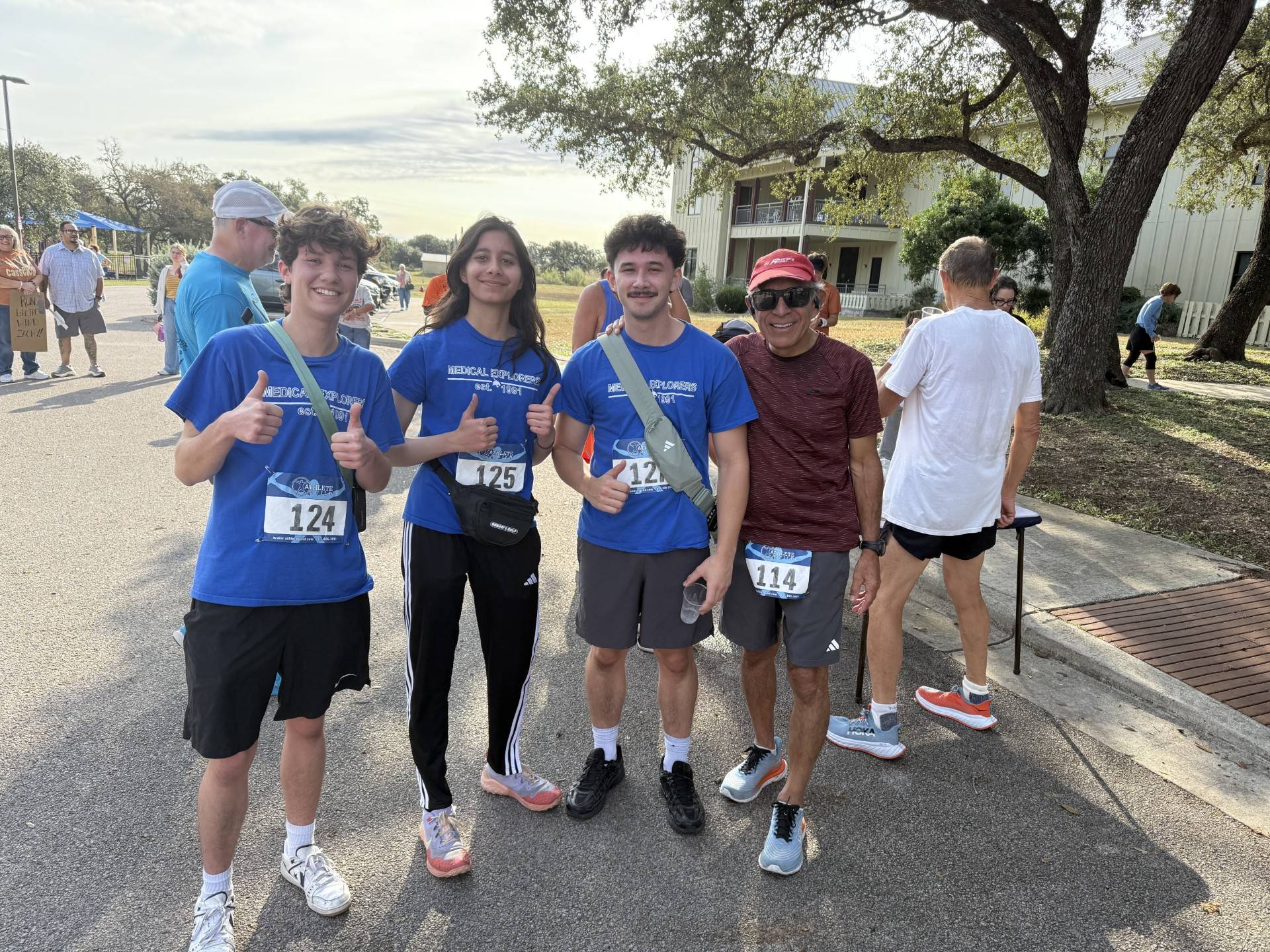
Our Racing Team, for those who don't know, is part of our Race First-Aid Crew. They can be running for personal time, but they don't pay to run. The rule is that they have to stop and help any injured runner. They have supplies in a “Fanny Pack” and a radio to call our mobile first-aid unit. This job may demand its own SOP or it could be included in a SOP determining the whole Race First-Aid crew.
Just so you'll know, our full Race First-Aid crew consists of a Start/Finish line crew, a mobile crew, and a racing team. That's quite an operation. Longer half-marathon races will have first-aid crews at water stations.
Standard Operating Procedures - A Third Step in Management
Our Omega Leo Medical Explorer Post 4077 is a complicated organization. With our student officers and liaisons responsible for keeping all our volunteer opportunities running smoothly, and with the turn-over that is a natural part of a college organization, we depend on our Standard Operating Procedure (SOP) system to help everyone know the steps to accomplish their responsibilities. Think of our SOP system as our corporate memory. With our SOP system, student leaders know the details asked of them even before they assume their responsibilities. Our SOP system helps remove much of the confusion that we would experience without it.
Texas State University has a similar system called the University Policy and Procedures System (UPPS). Its purpose is similar to our SOP system - Corporate Memory of details on how to accomplish important tasks. Our university would have a difficult time maintaining its operations without our UPPS system. We're the same. We're too complicated an organization to operate without a SOP system.
All student leaders and senior advisors have a responsibility to write and prepare SOPs for areas of their responsibilities. All SOPs need the careful attention of those who have the responsibilities outlined in the SOPs, after all you are the person who best knows what should be written. This should not become too great a burden. If everyone could write one SOP a semester, it would accelerate the process greatly. Think of this activity as useful someday when you're responsible for managing a clinic. You'll think back on this task and be better prepared for your new management responsibilities.
Each officer and liaison is provided copies of the SOPs related to their positions. Each should review them carefully while helping make them better. Our 2nd Vice-President of Systems has special responsibility in helping ensure that this happens. Our senior advisor is always available to help.
There are a few SOPs related to the creation of the system, authority to write SOPs, and the Review and Approval of SOPs. Ask for copies of SOP 000.01.01 Establishment of a Standard Operating Procedure System, SOP 0000.02.01 Authority to Write a Standard Operating Procedure, and SOP 0000.03.01 Review and Approval of Standard Operating Procedures. Copies should be included in the binder of SOPs related to your position.
It's our SOP system that others need to duplicate us. Hopefully, we'll be able to share all our SOPs soon. These other groups (some outside of Texas) will do is edit our SOPs to match their area and operations.
The following Excel Spreadsheet is a list of SOPs already written and others that may yet be written. Those with RED ink have been written, but are good candidates that may need to be updated by the officer or liaison responsible. The ones in BLACK have not yet been written. Their listing, however, may be antiquated and not now needed. Help decide whether they are still appropriate and needed. And then there are those that should be on the list that are not. Each officer or liaison should help improve this list. If you have an idea for improvement of existing SOPs, or know one that should be deleted or added, please communicate that to our 2nd Vice-President of Systems. With everyone helping, this list should become an accurate list of all SOPs needed to make us the best we can be. This is a big job, but working together we can get it done.
Our Vice-President of Systems and our advisors always have a short list of SOPs that may not be on the spreadsheet list below. You and your supervisor should meet for a special meeting just to discuss the system and needed SOPs at least once a semester.
Five Tips for Growth - Recruitment - A Part of Everyone's Responsibility
Being a member of our Omega Leo Medical Explorer Post 4077 is much more than just volunteering. We extend the opportunity to any student who would like to be part of something bigger than all of us. Tell your friends and anyone about who and what we do. Take advantage of all yourself. There's training in medical skills, but there is also training and service and leadership. Wouldn't it be great if our university had an Omega Leo club in areas other than health! Maybe with our leadership and guidance, we can help make that happen.
Here are five tips to help make us grow. These five points should be reviewed by each of our leaders. How can you help? We have a Membership Committee that needs your contribution.
-
Do volunteer projects that matter
Find ways to do meaningful service while bringing people together and having fun. Tie most volunteer activities to the future careers of our members.
-
Celebrate your wins
Share your achievements proudly. Your success stories can inspire others to join you. Public Relations Officer, this is your primary responsibility, but everyone has a part to play.
-
Show the Omega Leo experience
Help the university and our community see that being a member of our Omega Leo Medical Explorer Post 4077 is so much more than volunteering.
-
Be Welcoming
Create an inclusive environment where everyone feels heard and valued. Remember the 12 words of the Scout Law.
-
Just Ask!
A personal invitation is often all it takes to bring in a new member.
Our External Affiliations That Help Define What We do
All our officers and liaisons should do whatever you can to help ensure our continued affiliation with these valuable external partners.
The following organizations are important to what we do, and these affiliations help define what we are. We're proud of how we have merged our purposes with each of these organizations. Many times, it's these organizations through which we serve our community. We multiply the impact of our Omega Leo Medical Explorers by partnering with others. All of these organizations are important to us, and we need to maintain good communication with each.
It's important that each officer and liaison value these organizations and the activities where we may have an important duty to learn and serve under their direction.
-
Scouting America
Scouting America is the new name (as of 2024) for the organization formerly known as the Boy Scouts of America (BSA). The name change reflects a more inclusive mission and modernized identity while maintaining its historic values and programs. Typically, they serve youth ages 5-20, while The Learning for Life career awareness Exploring program normally serves ages 14 through 20. We are the exception.
First, we know our Boy Scout roots is a concern for some, but no one should be turned off because on our affiliation with Boy Scouts. They may need to revise their first impression. Look around at our membership. We're 70% women. Second, they should know that Scouting America has always had women leaders, but in recent years, girls are making up a sizable proportion of the youth membership. Their program has changed and is now a whole family program. Scouting America has over 7,000 female Eagle Scouts today and the number is growing fast. Third, our Medical Explorers is the only unit within the Scouting America family that serves young adults through their “career awareness” program Learning for Life. Our age mostly goes from 18 to 30, but we can serve any age college student. We're proud to be part of one of the largest community service organizations in the world. We're new and different. Prospective members should join us if they want the benefits and advantages that we can offer.
We're not a “Boys Club.” Scouting America saw the need and gave us a chance to help with a growing problem for college students seeking careers as health professionals. We're the NEW WAY of preparing future health professionals that can overcome the obstacles to many important parts of the traditional OLD WAY of preparing future health professionals; things that are now almost impossible given changes in privacy laws, insurance payment changes, and changes in the organizational structure of healthcare. It's to any prospective member's advantage to join our organization. If they're still concerned, encourage them to visit with our senior advisors. All of our officers and liaisons should help explain this to potential members.
Chartered in 1991, our Medical Exploring Post 4077 was the first scouting unit in the nation, designed to serve both men and women college students through the Learning for Life Exploring program. We serve 18 through 20 age students, classifying them as Exploring Participants (still requiring “Adult" membership requirements), but then we also serve any college student over age 21 through regular adult registration. It's complicated but it allows us to match the requirements of the Scouting America membership computer software.
We have had premed students over 30 and nearing 40. If they are a Texas State University student, they're always welcome to join and participate. There is no difference in our program for any age college student, regardless of age. Our program has value for any age college student.
Some in the Scouting America leadership consider our organization a Scouting program for adults.
We're proud of our Scout history and continuing relationship.
-
Lions Clubs International
Lions Clubs International (LCI) is the world’s largest service club organization dedicated to humanitarian service, community improvement, and leadership development. It was founded in 1917 with the motto “We Serve.” There are over 1.4 million Lion Club members in over 200 countries. All Lion Clubs focus on eight global causes: Vision, Hunger, Environment, Diabetes, Childhood Cancer, Disaster Relief, Humanitarian Efforts, and Youth Development. A cause likely to be added soon is Mental Health.
In 1925, Helen Keller challenged the Lions to become “Knights of the Blind,” leading to their long-standing global focus on vision care.
Our Medical Exploring Post has a long history working along-side area Lion Clubs and since our service areas overlapped that of Lions, someone got the bright idea to make us a part of the Lion family as an Omega Leo club. Omega Leo clubs are used much more extensively on the international basis, but there are a few Omega Leo clubs in the U.S. As far as we know, we're the only Omega Leo Club focused in healthcare and biomedical technology.
Thus, our organization name now is the Omega Leo Medical Exploring Post 4077, and we continue to have charters in both organizations. We're proud to part of the two largest organizations in the world devoted to “Service,” Scouting America and Lions Clubs International. We continue to volunteer with Lions by providing a roaming first-aid crew (under CERT protocols), blood pressure and diabetic clinics, 5K race first-aid crews, and vision testing clinics for Wimberley Lions, San Marcos Lions, Bluebonnet Lions, and others. As more Central Texas Lion Clubs discover us, we expect this list to grow quickly.
-
Community Emergency Response Team (CERT)
We have been affiliated with the Hays County Texas CERT organization since the early 1990's. We were first asked to support Hays County EMS at large community events by Fire Marshal Ken Bell. He trained us under CERT guidelines and protocols, and we have been strong participants as CERT volunteers ever since. All Medical Explorers are expected to join our Hays County CERT and complete the G-317 Introduction to CERT courses as quickly as their class schedules allow. Our Medical Explorer members have gone on the be trainers for other CERT volunteers, sharing our skills in Frist-Aid, CPR, and Stop the Bleed.
We see our CERT affiliation as an important aspect of our training program. We have had a few members go as far as to become certified FEMA/CERT Trainers by completing the G-428 Train the Trainer course.
We serve Texas State University as roaming first-aid crews during football games and graduation ceremonies under CERT authority. We're looking forward to the university having an organized Campus CERT program where we can serve the campus better as CPR and Stop the Bleed instructors. We see our Omega Leo Medical Explorer CPR Training Center as helping make Texas State University a safer campus. We have over 10 advanced members fully certified as CPR and Stop the Bleed instructors ready to help.
CERT training will be a valuable addition to our member's qualifications as future health professionals. They will understand better how to work along-side first responders during future disasters and emergencies being fully trained in the ICS system for emergency response.
-
National Marrow Donor Program (NMDP)
Our Omega Leo Medical Explorer Post 4077 has been designated as a “NMDP National Ambassador Organization" to help recruit potential donors for blood marrow stem cells. The National Marrow Donor Program (NMDP) is a U.S.-based nonprofit organization that operates the world’s largest registry of potential blood stem cell donors to help patients with life-threatening blood cancers and disorders find a transplant match. In previous years, it has operated under the name “Be The Match.”
We help with donor sign-up events on the Texas State University campus twice a year, but also have donor sign-up events throughout Central Texas. There is a critical shortage of potential donors among Hispanics, and since our university has a high portion of Hispanic students, it's important that we help register potential donors on campus each fall and spring. The donors may never be called, but if their DNA is a match, our university student could help save a life anywhere in the world. Maybe being called 10 or 20 years after they have graduated and dispersed worldwide.
Matching with a patient of the same ethnic group helps ensure success of the transplanted blood marrow stem cells. Collecting the donor blood stem cells has become a “simple” process in recent years - just like donating blood.
We further set up our donor solicitation station at other San Marcos and Central Texas events.
-
Stop the Bleed Coalition
Our Medical Explorers have been licensed as Stop the Bleed instructors since the beginning of Stop the Bleed in 2015. We were first licensed in 2017 by the American Surgeons Association and the US Department of Defense. Later we joined the Stop the Bleed Coalition as a campus Stop the Bleed Club.
Our Omega Leo Medical Explorer Post 4077 is a resource for training in Stop the Bleed for the Central Texas Area as well as Hays County CERT and the University.
We have obligations to the Coalition that should be managed by a senior level officer or liaison. These are important tasks so seek guidance from a senior advisor.
-
Mission Able
Mission Able is a local San Marcos, Texas organization formed in 2013 to serve the San Marcos community in any way needed to improve the quality of life of those in need.
Its biblical guiding principles remains the same. No job is too small or too complex for the Mission Able team. The team is composed of community volunteers as well as professional carpenters, plumbers, and electricians. Mission Able is truly a community wide effort with volunteers coming from many area churches and service clubs.
Our Omega Leo Medical Explorers can be a part of the Mission Able crews. Think of the program as a 12-month Bobcat Build program. Our first-aid crews can help by being ready for the inevitable injuries.
To learn more about the Mission Able program, check out the following website: https://www.missionablesmtx.org.
-
School Fuel
School Fuel’s mission is to provide the "fuel" for a better learning environment by removing the pangs of hunger among the students in our classrooms. Over 75% of our school age children qualify for the federal free/reduced lunch program. Most of them go home on the weekends to little or no food.
Statistics show that children who struggle with hunger at home perform at lower levels in school during the week.
In the Spring of 2013, School Fuel began with a pilot program providing food sacks for 31 homeless students; the pilot reflected an overall increase in the performance of those students and a lowering of nurse visits with complaints of head and stomach aches. The teachers and school administrators were instrumental in choosing the participants and collecting evaluations of their performance and progress. The results were overwhelmingly positive.Medical Explorers volunteer to pack sacks of food to be taken home by the children identified by the school system as needing additional nutrition over the weekend. We consider this an important community service opportunity.
To learn more about School Fuel, click on the link below:
https://www.schoolfuelsanmarcos.org/our-story
-
Texas Ramps Project
Have you ever changed a person’s life in a single day?
The Texas Ramp Project volunteers have done it for over 40 years and over 32,219 times! We build wheelchair ramps for disabled or elderly people who can’t afford to buy one. In a few hours on a Saturday morning, we give these folks the freedom to leave their home again – the home where they want to remain but whose steps have imprisoned them.
Learn more here - https://texasramps.org/
Our CPR/First-Aid Certification Affiliatations
Our Omega Leo Medical Explorer Post 4077 is an approved CPR/First-Aid Training Center by several of the leading certification organizations. Our student members are approved to teach certification classes under the guidelines of at least one of the following organizations. We maintain relationships with several to allow us to best meet the needs of our members and community clients. We select from among the courses offered through any single organization.
Our Medical Explorer student members and alumni make up most our instructional faculty. We invest in our student members in training and financially to prepare them as CPR/First-Aid instructors. Being an approved/certified CPR instructor is a great qualification to put on any application to an advanced health academic program.
-
American Health and Safety Institute (ASHI)
The American Health & Safety Institute (AHSI) is a U.S.-based organization that develops and delivers CPR, AED, first aid, and emergency care training programs. It provides nationally recognized certification courses used in workplaces, healthcare settings, schools, and community organizations. AHSI is commonly used for workplace and community-level training because it is flexible and cost-effective.
ASHI has a sub-component known as Health and Safety Institute or HSI. Our Omega Leo Medical Explorer Post 4077 is a HSI CPR/First-Aid Training Center.
-
Emergency Care and Safety Institute (ECSI)
The Emergency Care & Safety Institute (commonly known as ECSI) is a U.S.-based organization that develops and supports training programs in CPR, first aid, AED use, and other basic emergency care and safety topics. Its mission is to provide high-quality, affordable, and evidence-based training materials and courses that help people learn the skills needed to respond confidently and effectively in emergencies.ECSI programs are developed to align with the most current scientific recommendations, such as those from the International Liaison Committee on Resuscitation (ILCOR) and recognized CPR/ECC guidelines. They also meet or exceed the educational objectives of similar training programs (like those from the American Heart Association) and are offered in association with respected medical organizations like the American Academy of Orthopaedic Surgeons and the American College of Emergency Physicians — which provide medical direction for the content.
Our Omega Leo Medical Explorer Post 4077 is an approved ECSI CPR/First-Aid Training Center
-
American Red Cross
The American Red Cross (ARC) is a U.S. humanitarian organization that provides disaster relief, blood donation services, emergency assistance, health and safety training, and support to military families.
It is the U.S. branch of the global Red Cross movement.
The American Red Cross was founded in 1881 by Clara Barton, inspired by the humanitarian work she witnessed in Europe.
The Red Cross emblem (red cross on white background) is protected under international law and symbolizes neutral humanitarian aid.
Red Cross is widely recognized for training in CPR, First-Aid, and other programs that prepare instructors for a wide variety of courses that save lives in times of emergency and disaster.
Our Omega Leo Medical Explorer Post 4077 is a Red Cross CPR/First-Aid Training Center.
Other Organizations Our Medical Explorers Should Know More About
These organizations may become important to you as you find your "passion" among the many volunteer activities our Omega Leo Medical Explorers do. Some are national while others are more local. You may find yourself joining these organizations as you seek further training and professional development.
Our Omega Leo Medical Explorer Post 4077 is for any student seeking a career in healthcare or biomedical technology. While primarily focused on preparing our members in clinical skills, there are advantages for the non-clinical student. There are many non-clinical careers even within the hospital, but then there are also careers in biomedical technology and engineering. The professional organizations listed below are a good place to begin your search for a future career. There are many more.
We can enhance your academic preparation through volunteer service. Come for a visit and ask how.
-
Other Organizations Medical Explorers Should Know More About
These organizations may become important to you as you find your "passion" among the many volunteer activities our Omega Leo Medical Explorers do. Some are national while others are more local. You may find yourself joining these organizations as you seek further training and professional development.
-
Texas Search and Rescue
-
Wilderness Medical Society
The Wilderness Medical Society (WMS) is the leading international professional medical society dedicated to wilderness and environmental medicine. Its purposes include research in wilderness medicine, developing evidence-based clinical practice guidelines, professional medical education, and hosting conferences and training courses.
Wilderness Medicine includes high altitude illness, hypothermia & frostbite, heat stroke & dehydration, lighting injury, dive and marine envenomation, and wilderness trauma.
The organization serves everyone with an interest in wilderness medicine including physicians, PAs, nurse practitioners, EMTs & paramedics, military personnel, expedition leaders, and outdoor professionals.
It offers the Fellow of the Academy of Wilderness Medicine (FAWM) credential and continuing medical education (CME). It partners with the National Outdoor Leadership School (NOLS Wilderness Medicine), Wilderness Medical Associates International, and the Wilderness Medicine Training Center.
WMS guidelines are considered the gold standard in wilderness clinical evidence.
-
National Association for Search and Rescue
The National Association for Search and Rescue was incorporated in 1976. Its purpose is to provide an international educational resource for professional preparation in Search and Rescue techniques and to serve as a certifying body for different levels and types of skills related to Search and Rescue as well as Instructors.
Anyone interested in participation in Search and Rescue should consider membership in NASCAR.
The website for NASAR is: https://nasar.org
Regular membership fee is $70, and includes many benefits and discounts.
Student membership is $60, and includes all of the above benefits.
-
National CERT Association
The NCA was created in 2019 with the intent to strengthen the CERT program throughout the US and internationally. Working in concert with FEMA, the NCA leverages the strength and experience of CERT programs nationwide to share guidance and best practices as well as build more robust communication channels so that CERT programs can connect with each other more efficiently.
NCA Website: https://nationalcert.org
Membership cost: General membership = $27.95
-
National Voluntary Organizations Active in Disaster - NVOAD
National Voluntary Organizations Active in Disaster (National VOAD) is the forum where organizations share knowledge and resources throughout the disaster cycle—preparation, response and recovery—to help disaster survivors and their communities.
Members of National VOAD form a coalition of nonprofit organizations that respond to disasters as part of their overall mission. National VOAD was founded in 1970 in response to the challenges many disaster organizations experienced following Hurricane Camille, which hit the Gulf Coast in August, 1969.
Prior to the founding of National VOAD, numerous organizations served disaster victims independently of one another. These included both government and the private, nonprofit sector. As a result, help came to the disaster victim haphazardly as various organizations assisted in specific ways. Unnecessary duplication of effort often occurred, while at the same time, other needs were not met. There was only limited availability of training for potential volunteers. Information for victims on services during disasters was woefully inadequate and communication among voluntary disaster agencies was very limited and coordination of services was negligible.
The seven founding organizations came together and committed to fostering the four C’s—communication, coordination, collaboration, and cooperation in order to better serve people impacted by disasters. Today, National VOAD is a leader and voice for the nonprofit organizations and volunteers that work in all phases of disaster—preparedness, response, relief, recovery, and mitigation. National VOAD is the primary point of contact for voluntary organizations in the National Response Coordination Center (at FEMA headquarters) and is a signatory to the National Response Plan.
Website: https://www.nvoad.org
Computer Science and Biomedical Engineering Organizations
Our Omega Leo Medical Explorer Post 4077 is for any student seeking a career in healthcare or biomedical technology. While primarily focused on preparing our members in clinical skills, there are advantages for the non-clinical student. There are many non-clinical careers even within the hospital, and there are many careers in biomedical technology and engineering. The professional organizations listed below are a good place to begin your search for a future career.
Consider how our Omega Leo Medical Explorers can help you as a non-clinical college major. Suppose you are an electrical engineer student, and you see exciting career possibilities in bioengineering. So, you graduate and apply for a position with a company like OttoBock, one of the leading international companies that manufactures computerized electronic prosthetics (that happens to have an office in Austin). You join Medical Explorers and participate in all our clinical skills training and volunteer opportunities. One of the activities you will be assigned to is a PT/OT shadow program where you observe PTs and OTs in the treatment of patients. You apply for a position with Ottobock and the competition is fierce. You are up against some of the best electrical engineering students from other universities from across the nation. But, you know the difference between a PT and an OT because of your participation as a Medical Explorer. You have watched PTs and OTs in how they work with patients with amputations, both leg or arm amputations. You already know the difference between a PT and an OT. You have a good idea of what the professional and the patient may need. You've watched the professional in the treatment of their patients.
Who would you hire? I would hire the applicant who best understands the needs of the patients and professionals. I would hire the applicant who already knows what both need and can tell those making the hiring decision that I'm ready to hit-the-ground running. I already know the difference between a PT and an OT. I bet the electrical engineering graduate who has been a Medical Explorer will get the job!
The same goes for Computer Science majors. A computer science student who has been a Medical Explorer participant will know what a HIPAA Risk Assessment is. You will already know about the various options hospitals have that meets HIPAA computer security requirements. Yes, we have a class just for you that the clinical types don't have to take. In this class, you get a head start of computer security issues that your competition will likely know nothing about. Who would you hire?
-
Health Information Management Systems Society (HIMSS)
HIMSS is a global, nonprofit organization focused on improving healthcare through information and technology. It brings together healthcare leaders, IT professionals, policymakers, clinicians, researchers, and technology companies to advance digital health transformation. HIMSS is an organization that plays a significant role in electronic health record (EHR) standards, health data interoperability, cybersecurity best practices in health, and digital transformation strategies.
HIMSS hosts the annual HIMSS Global Health Conference & Exhibition, one of the largest health IT meetings in the world. It takes three days to see all the exhibits. HIMSS provides professional certifications and professional development for engineers and computer professionals.
-
Biomedical Engineering society
A leading professional organization for biomedical engineers and bioengineers, serving students, faculty, researchers, and industry professionals with meetings, publications, and networking opportunities.
-
IEEE Engineering in Medicine and Biology Society
Part of the IEEE, EMBS is one of the largest international societies for biomedical engineering and related technologies.
-
More Biomedical Professional Organizations
This is an incomplete list of key professional organizations in the field of biomedical technology and biomedical engineering. There are many others in subspecialty areas such as genetic engineering. These groups support professionals, students, and researchers through conferences, networking, publications, standards, and education:
1. Biomedical Engineering Society (BMES). Primary U.S. professional society The leading professional organization for biomedical engineers and bioengineers, serving students, faculty, researchers, and industry professionals with meetings, publications, and networking opportunities.
2. American Institute for Medical and Biological Engineering (AIMBE). A nonprofit representing top leaders in medical and biological engineering (often elected as Fellows).
3. IEEE Engineering in Medicine and Biology Society (EMBS). Part of the IEEE, EMBS is one of the largest international societies for biomedical engineering and related technologies.
4. Association for the Advancement of Medical Instrumentation (AAMI). Focuses on healthcare technology development, management, and safe implementation of medical devices.
5. Society for Biomaterials. Interdisciplinary organization concentrating on materials used in medical and biological applications.
Other Relevant Organizations
American Society of Biomechanics. Focuses on biomechanics within engineering and health sciences.
American Society of Mechanical Engineers (Bioengineering Division). Crossdisciplinary work involving mechanical engineering and bioengineering.
International Federation for Medical and Biological Engineering (IFMBE). Global federation linking national and regional engineering societies. International and Regional Groups
Canadian Medical and Biological Engineering Society (CMBES). Canadian professional society for biomedical engineering and clinical engineering.
Australasian College of Physical Scientists and Engineers in Medicine (ACPSEM). Serves professionals in Australia and New Zealand.