

Semester Schedule
Our semester schedule changes frequently with additions and modifications. Please check back very week.
Our calendar mostly shows events of interest to the general membership. Individual volunteer opportunities are not shown, only activities of interest and requiring a crew or multiple members.
Click on the button to the right and enlarge if necessary.

Medical Explorer Training Requirements - Level One
Yes, we know our Required Training may be demanding, but this is the hallmark of our program. As a Medical Explorer, you will have hands-on volunteer experiences involving patients. You may spend some of your time in "Observation Mode," especially in the beginning.
But there will be times you are expected to provide service to real patients. We will never deploy you in these situations unless we believe you are ready.
Your responsibility is to prepare for these opportunities as quickly as you can. The following is just our Level One Training. SOP 1200.01.01 explains our full Training Program; ask for a copy by e-mail to a senior advisor. Finish these courses and there are more advanced training opportunities that will be open to you. We encourage you to move as quickly as you can while keeping an eye on your first priority - your courses. We try to deliver all our required courses multiple times a semester, so if you miss an opportunity check our semester schedule. If another opportunity is not there, ask a senior advisor.
-
1. Orientation to the Omega Leo Medical Explorer Program – typically 1.5 hours.
This orientation class is to introduce the new member to what Omega Leo Medical Explorers do as volunteers and the expectations of all volunteers. It will also show 1) our position within other organizations (university, Scouting America, Lions Club, Hays County Office of Emergency Services, etc.), 2) the organizational structure of our Omega Leo Medical Explorer Post 4077 and internal and external lines of authority, 3) the role of the new member and their growth path within the organization into positions of responsibility and leadership, and 4) our history and goals for the future.
-
2. CPR Certification at the Basic Life Support (BLS) level - 4 hours
This certification must be either through the American Heart Association, American Red Cross, Emergency Care & Safety Institute (ECSI), or American Safety & Health Institute (HIS), and current within the past two years. Other certifying organizations will typically not be honored. Members already certified at a lower-level “community CPR” course must complete the certification at the higher first professional level - Basic Life Support (BLS).
All members must re-certify every two years. Our Omega Leo Medical Explorer Post 4077 currently offers CPR BLS certification classes through the American Safety & Health Institute (HSI), American Red Cross, and the Emergency Care and Safety Institute (ECSI). Our Omega Leo Medical Explorer Post is an approved Training Center for other courses at higher levels with American Red Cross, HSI, and ECSI. We use the HSI certification frequently because of its focus on emergency response and it's common use by many EMT training programs, but we may teach a BLS class under the authority of another certification agency.
-
3. First-Aid Certification – 4 hours
The certification must be either through the American Heart Association (AHA), American Red Cross, Emergency Care & Safety Institute (ECSI), or American Safety & Health Institute (HSI). Other certifying groups will typically not be honored. The Omega Leo Medical Explorer Post 4077 currently offers First-Aid certification classes through Red Cross, HSI, or ECSI. Members already certified by any of the four groups we recognize will be honored if current. All members must be certified in First-Aid every two years unless they are already Texas Certified EMT’s or other certified or licensed health professionals.
-
4. HIPAA Basics – Health Insurance Portability and Accountability Act– 1.5 hours
The course covers the basics of HIPAA, its history, the responsibilities of the health professional, enforcement, penalties for violation, and changes in HIPAA regulations over time. This class is taught by Omega Leo Medical Explorer Post 4077 and must be taken from our instructors. Federal law requires this class be taught by each institution for both employees and volunteers. You will have to attend many HIPAA classes throughout your career.
-
5. HIPAA and Computer Security – 1.5 hours
This course covers new threats to patient privacy from computer technology and social media, as well as the responsibilities of health professionals to protect patient data from computer hackers. Threats and methods to protect personal privacy for health professionals will also be discussed. This class is taught by Omega Leo Medical Explorer Post 4077 and must be taken from our instructors.
-
6. Blood-Borne and Other Infectious Pathogens and Safety Procedures – 2 hours
This course examines safety procedures for all health professionals, with detailed discussion of Hepatitis and HIV. Further discussion is directed toward other methods of infection to include air-borne, food sources, as well as blood-borne pathogens. Personal Protective Equipment will be examined, as well as procedures to prevent infection of patients. Lastly, other potentially infection materials will be discussed. This class is taught by Omega Leo Medical Explorer Post 4077, but certification through any one of the above four organizations or OSHA will be acceptable on a temporary basis. All Omega Leo Medical Explorers must complete the more advanced course taught through Omega Leo Medical Explorers in a timely manner.
-
7. Child-Abuse and Protection for Omega Leo Medical Explorers – 30 minutes.
This in-person course is an expansion of the online Boy Scout course, and is focused on rules more applicable to the age group of our members. Specific rules of the Boy Scouts of America (Scouting America) will be emphasized as they may apply to the operations of our Omega Leo Medical Explorer Post. Two-deep leadership and no one-on-one interaction with children will be emphasized, as well as sexual abuse and bias between explorer members. This class must be locally completed and is taught by our Omega Leo Medical Explorer Advisors.
-
8. Scouting America (Boy Scouts) On-Line Youth Protection– 1-hour on-line course
This on-line course will satisfy certification of the Boy Scouts of America (Scouting America) for “Youth Protection” Training. A certificate will be printed following the on-line course. This course must be taken on-line through the Boy Scouts of America. The certificate must be filed with the Medical Explorer Training Officer and a copy submitted to the Medical Explorer Membership Secretary to be attached to your Boy Scout application. Your Medical Explorer application is not complete until you finish and pass this course. You must repeat this course every two years and submit the completion certificate to our membership secreatary.
-
9. Stop-the-Bleed (Trauma Bleeding following gun shots and knife wounds)–2 hours
Techniques to stop severe trauma bleeding will be discussed and demonstrated. Hands-on practice will focus on tourniquets and the use of hemostatic gauze used to stuff wounds. This class is taught by our Omega Leo Medical Explorer Post 4077, but certification by others qualified to teach the nationally recognized “Stop the Bleed” classes will be accepted. A copy of your certification must be filed with the Omega Leo Medical Explorer Training Officer if taken outside of our Omega Leo Medical Explorer program.
-
10. Vital Signs and Measurements – 2 hours (BP and Blood Sugar), multiple times a semester, to be repeated every semester.
We are focused on a deeper level of skill and knowledge and will be scheduling some of these vital sign skill classes for delivery during a regularly scheduled Tuesday night meeting, with other classes requiring longer meetings on weekends. Critical skills required of all medical explorers include 1) measurement of blood pressure both manually and with automated devices, 2) measurement of blood sugar using glucometers and A1C meters, 3) oxygen saturation and pulse using pulse oximeters, 4) heart and lung sounds using a stethoscope, and 5) administration of medical oxygen. Classes for these skills will review the mechanics of operating the devices and normal and abnormal values. Members are encouraged to either retake these classes or help teach the courses each semester. Attendance at any weekly meeting where these skills are being taught is expected, either as a student or instructor. Attendance as student or instructor is an important pat of your participation as a Medical Explorer. New members are encouraged to volunteer early in volunteer activities where you can gain practice in taking blood pressures and glucose measurements. Our Sunday morning first-aid clinics or Wimberley Market Days are a great ways to get the practice you need to perform at a “professional” level. We frequently have other opportunities to practice your skills in vital measurements when we deliver clinics throughout our community.
-
11. Administration of Narcan
Treatment for opium overdose may be covered in an in-person class or an online course. If online, submit your certificate for this course to our Training Officer. Our senior advisors will provide details on how to complete this course. Look for hand-outs distributed during our weekly meetings.
-
12. Administration of Medical Oxygen
We may have medical oxygen available in some of our volunteer activities. If available, you are expected to know how to use oxygen in case of heart arrest or attack. Learn when to administer oxygen, the mechanical operation of our oxygen tanks, and our approved “scope of practice” oxygen flow rate.
-
13. Professionalism in the Health Professions – 2 hours
There are many aspects of how a health professional should interact and present themselves to colleagues, patients, or their family. These characteristics range from personal appearance to the verbal interaction with patients to how you may practice the skills you will learn in our other required courses. It's important to adopt these professional practices quickly and hopefully before you participate in our “medical” volunteer activities.
Remember, our Omega Leo Medical Explorers is NOT a typical “student organization,” but rather a “volunteer medical organization” where you have hands-on patient responsibilities. It's important that you look and act like a health professional. We are “expected” to look and act like a professional by the patients we serve and the professionals we work with. From the patient’s perspective, you ARE a health professional if you are doing things with the patient that a health professional would normally do.
Our senior advisors will expand upon the content in this course discussing the 12 words found in the Scout Law, and the 3 words we added, as to their importance to any health professional.
This course and further discussion by our senior advisors is part of what sets this organization apart from others, and our members apart from other college students.
This course is also important to have on your Medical Explorer resume and is expected by many of our more intensive volunteer or shadowing opportunities.
FEMA/CERT Training
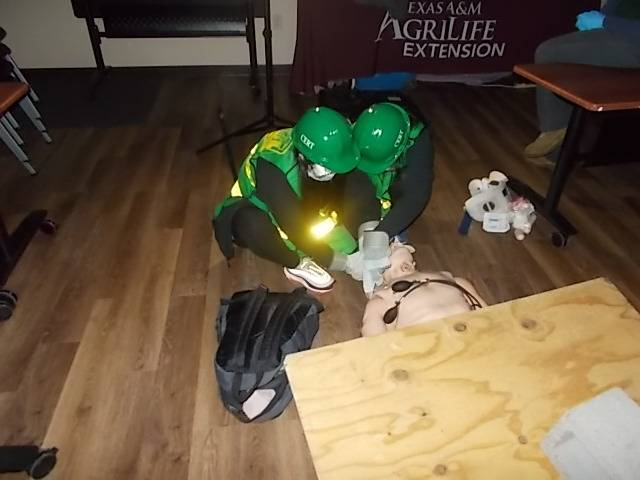
All Medical Explorers are expected to complete the FEMA/CERT G-317 Introduction to Community Emergency Response Team (CERT) as soon as practical. Our Medical Explorers are an important part of the Hays County Office of Emergency Response. Crew Chiefs for our CERT crews must have completed this course. More advanced FEMA courses are encouraged, with the possibility of eventually completing the G-428 Train the Trainer course that will certify you as a FEMA/CERT instructor in Medical Disasters.
Expectations of All Medical Explorers
New members should begin their training as quickly as possible. Medical Explorers are expected to be good time managers. Your first responsibility is to your academic courses, so never sacrifice needed study time. You are entering a profession where you may not have much personal "fun" time for the foreseeable future, so carefully think about your priorities. After "study time" comes your commitment to training and volunteer experiences you will have through Medical Explorers. You are STRONLY encouraged to seek the help and advice of our senior advisor if you find yourself in academic trouble. There are solutions if you seek help early in the semester. Please don't wait. There is always a solution.
-
Expectation 1 - Healthcare is Not for the Squeamish (It gets easier with time)
An old Motto of our Omega Leo Medical Explorer Post 4077 is “No job is too small, and no job is too yucky.”
Omega Leo Medical Explorers know how to protect themselves from all sorts of pathogens that can be in the “yucky” stuff we work with. Yes, we know some of the activities we get involved with can be difficult, but you are “at the Bottom” so “Buck up” and get started!
It is all part of being a health professional. Wear it with pride!
-
Expectation - 2 Reliability
Omega Leo Medical Explorers must be reliable in their volunteer assignments. If they commit to a volunteer or training opportunity, then they must show up. This applies to the greater organization activities as well as the activities arranged by the individual Medical Explorer.
Being a “No Show” for an event is a serious offense and if repeated can be grounds for dismissal from future Medical Explorer activities for the semester or dismissal from the organization as a whole. There are clearly defined expectations and rules for the rare times you may need to cancel your participation in a training or volunteer assignment. Be sure you know to whom you should report such cancellation. Our Medical Explorers has an Organizational Structure where there is a clear reporting line of authority. Don’t be a No Show!
-
Expectation - 3 Recording Your Volunteer Service
Among your early tasks is to begin preparing your Medical Explorer Resume. This resume looks very different from your professional resume. There is a Medical Explorer Standard Operating Procedure (SOP) on how to write a Medical Explorer Resume (SOP 1102.02.01). A web link to download a copy is:
https://docs.gato.txst.edu/777251/SOP%201100.02.01%20-%20The%20Medical%20Explorer%20Resume.pdf
Another early task is to prepare an electronic spreadsheet log showing the detailed hours for the activities on your Medical Explorer resume. See SOP 1100.02.02 for details about how to prepare this volunteer hour log. Ask for a copy of this Standard Operating Procedure and the associated template for your spreadsheet. Again, ask for a SOP copy.
A web link to download a copy is:
Both of the above documents should be started in your first month as a Medical Explorer. Yes, we know they will be blank, but they will fill quickly. Record all your training and volunteer activities within a week after they occur.
An Excel template for recording your training and volunteer hours can be downloaded here:
Your officers and Dr. Johnson need frequent copies of your resume and volunteer hour spreadsheet. They cannot do what needs to be done to help you without your updated resume and volunteer spreadsheet. Every month is preferred, or two at the most.
Inspiration
We'll begin with a group of female physicians at the national level. We'll add local female physicians next, followed by male physicians (national and local).